
Live from DST Thailand Defense Expo! Nanoradar's 8 Radar Models + 720° Omni-Directional Perception Empower Precise Drone Flight
2025-11-11


Abstract
The leading defense event in ASEAN – the Defence & Security Thailand (DST) Exhibition – grandly opened from November 10-13 at the IMPACT Exhibition Center in Bangkok! Nanoradar participated deeply, showcasing drone radars and security radars at Booth T19, joining over 400 exhibitors and tens of thousands of professional visitors from around the world to explore cutting-edge defense technologies.

Spotlight: 8 Drone Radar Models Delivering a 720° Omni-Directional Perception Solution
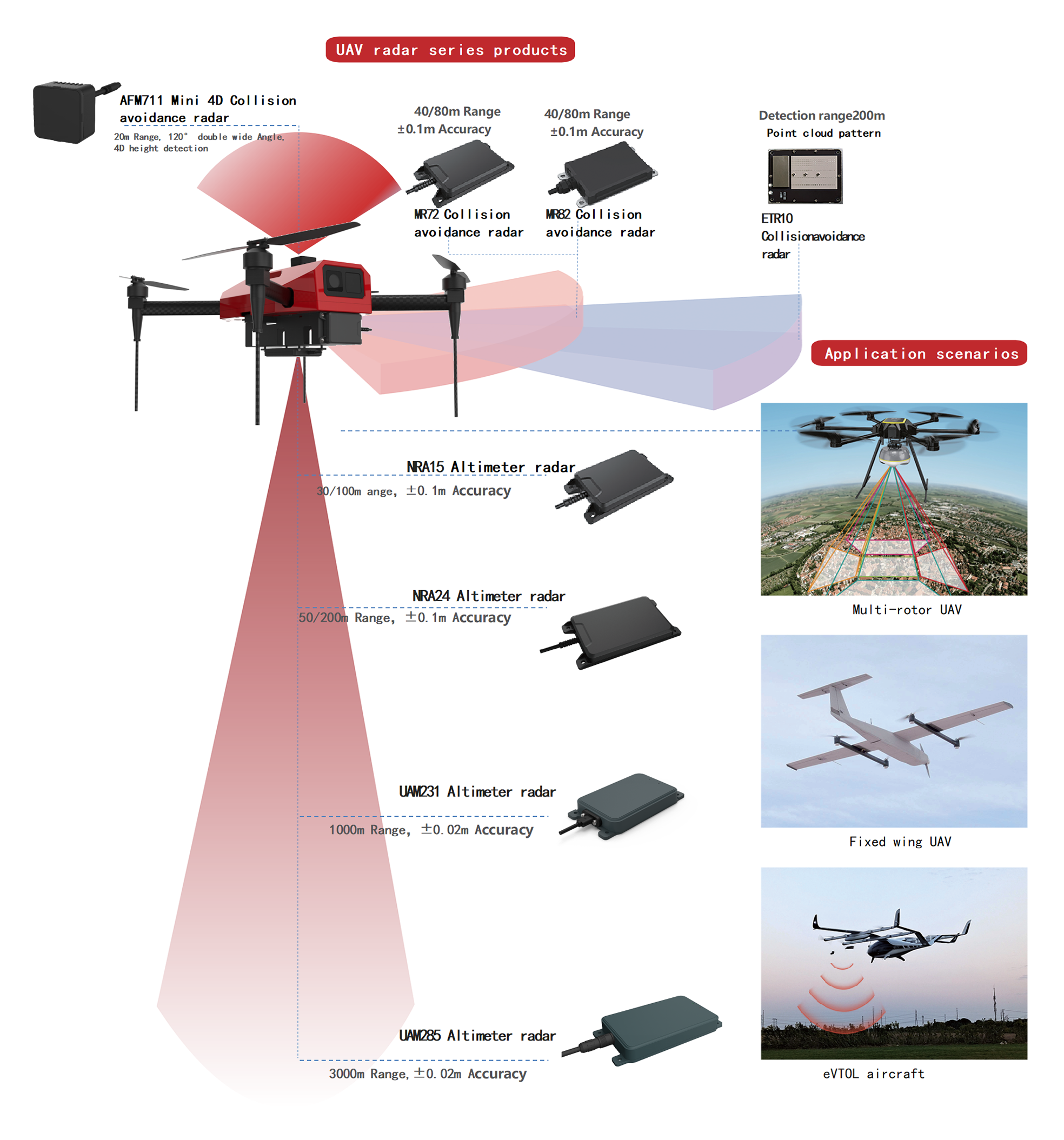
For the drone sector, Nanoradar has developed 8 altitude-holding and obstacle avoidance radar products, featuring high refresh rates of 50-500Hz and detection ranges covering specifications from 30 meters to over 3000 meters.
Radars installed below the drone measure flight altitude, while front, rear, left, and right radars detect flight obstacles. A top-mounted radar ensures the drone avoids overhead obstacles like high-voltage power lines. Together, these 8 radars provide 720° omni-directional立体 protection for drones!

Technical Advantages & Global Recognition
Technical Advantages
Nanoradar's drone radars offer a detection range of up to 3000m, unlocking BVLOS scenarios like high-altitude inspection. With low power consumption of 6W (less than half that of similar products), ranging accuracy of ±0.02m, and a blind zone of 0.2m (over twice as good as similar products), the high precision and small blind zone ensure stable and safe drone takeoff and landing.

Global Collaboration, Seamless Open-Source Flight Control Integration
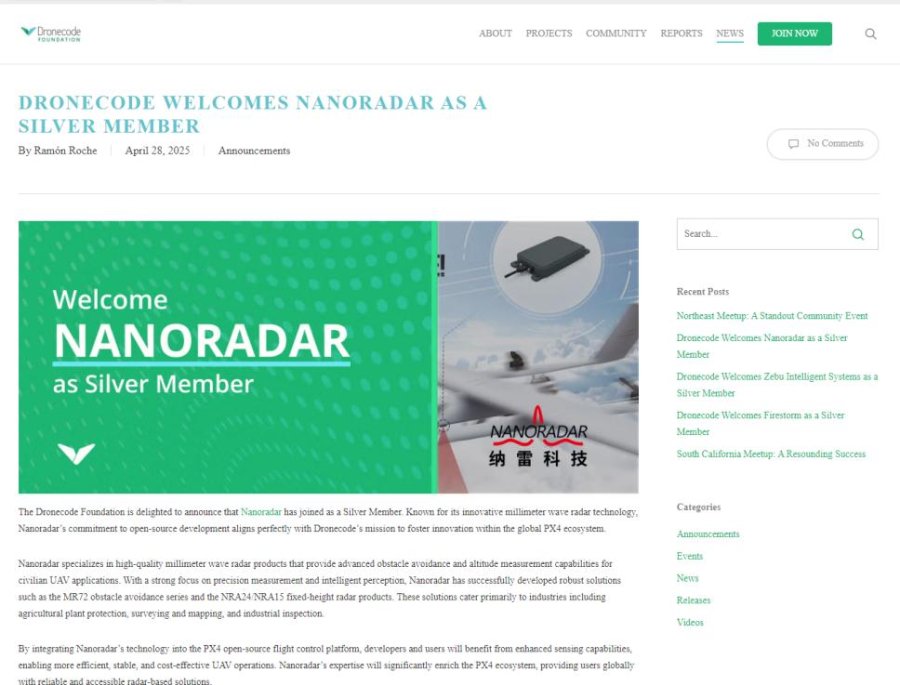
Nanoradar is an official partner of 4 open-source flight control platforms (APM, PX4, FMT, ACFLY). It supports mainstream PX4 flight control hardware (e.g., Pixhawk 4, Cube Orange) and APM hardware platforms (e.g., Pixhawk 2.4.8). Deep adaptation to PX4's MAVLink protocol and uORB communication framework, as well as APM's MAVLink and existing sensor driver architecture, enables seamless integration and plug-and-play functionality.

Top Player in Drone Collision Avoidance
The exceptional performance of our products has been recognized by numerous customers, with nearly 100,000 units sold and exports to over 30 countries worldwide. Nanoradar has been defined by the foreign media analysis agency Orbis as a "top player in the drone collision avoidance field."

The Expo Continues – Don't Miss Out!
November 11th-13th, Nanoradar continues to welcome you at Booth T19, IMPACT Exhibition Center, Bangkok. More in-depth exchanges and collaboration discussions await – let's jointly explore more application scenarios for millimeter-wave radar in the low-altitude drone industry!

Recommended Reading
Perimeter Security Radar for Boundary Protection | Nanoradar
2026-10-22
2026-10-19
CONTACT US
1
Please read our 《Platform Compliance and End-User Undertaking Statement》 before purchasing any product on this website.
Consultation Hotline
+86-731-88939916
Head office Address
B7, Lugu Corporation Plaza, No.27 Wenxuan Road, Hi-tech District, Changsha, China

Please tell us what you need
Please provide your contact details and specific requirements below. We will contact you within 2 business days.