Natural Water Level Monitoring

Precision Meets Simplicity! WTR10 Water Level Measurement Radar Upgraded
2025-07-11


Abstract
Nanoradar Water Level Measurement Radar WTR10: With core features including ±3mm high precision, 0.1-30m wide range, and 6° narrow beam, it delivers a stable, precise, and easy-to-use water level monitoring solution.
When heavy rain pours, are your water level readings always disrupted by raindrops?
Do floating debris in rivers cause monitoring errors to skyrocket?
Is there no space for large equipment in tight areas?
......
How can these traditional water level monitoring challenges be solved?
Nanoradar Water Level Measurement Radar WTR10: With core features including ±3mm high precision, 0.1-30m wide range, and 6° narrow beam, it delivers a stable, precise, and easy-to-use water level monitoring solution.
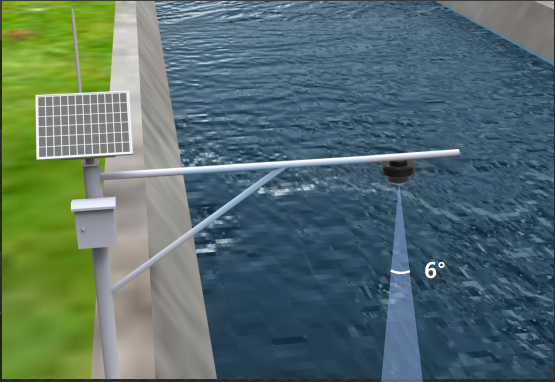
Core Performance: Stability and Precision Combined
Stable Detection
6°×6° detection beam with lens antenna design ensures stable monitoring in complex environments.
Dynamic clutter filtering algorithm automatically eliminates environmental interference, delivering reliable measurement data.
Precise Measurement
0.1–30m range with ±3mm accuracy, verified by the Hydrology Instrument and Geotechnical Engineering Instrument Quality Supervision and Testing Center (MWR).
Three Product Configurations to Flexibly Match Needs
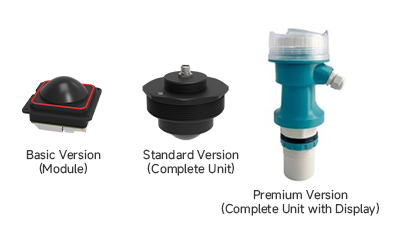
Base Version | Standard Version | Premium Version | |
Form Factor | Bare Module (42×62×62mm) No housing Industrial module | Enclosed Unit (IP67) Sealed casing Corrosion-resistant | Enclosed Unit + Display Real-time local display Remote management |
Key Features | Highly customizable integration | Plug-and-play deployment | Smart visual monitoring |
Applications | For OEM integration | Rivers/reservoirs Direct deployment | Flood control centers Smart water management |
The WTR10 Water Level Measurement Radar offers three configurations to adapt to different scenarios, enabling flexible solutions for full-scenario water level monitoring coverage.
Easy Integration, Seamless Connectivity
Industrial-standard Modbus and RS485 protocols for seamless IoT platform integration and remote data transmission, enabling 24/7 data collection and monitoring.
6V–24V wide voltage input adapts to various environments.
NB-IoT & RS485 interfaces ensure compatibility with diverse IoT platforms.

Strong Adaptability for Complex Environments
Non-Contact Measurement, Unfazed by Harsh Conditions
Radar emits electromagnetic waves that propagate even in vacuum, unaffected by water density, sediment content, or pollutants.
Immune to temperature, wind speed, rainfall, and other environmental factors—ideal for flooding, sediment accumulation, and other complex scenarios.
24/7 All-Weather Operation
Millimeter-wave radar technology ensures minimal impact from wind, rain, or fog.
IP67 protection—waterproof, dustproof, and resistant to temperature extremes, sediment, dust, river pollutants, and floating debris.

Low Power Consumption, Energy-Efficient
1.5W low power with energy-efficient chips; 1mA current in sleep mode, significantly reducing energy use and operational costs.
Solar-powered option eliminates the need for stilling wells.
No moving parts, no mechanical wear, long lifespan.
Operates in -40℃ to +70℃, suitable for extreme outdoor environments.
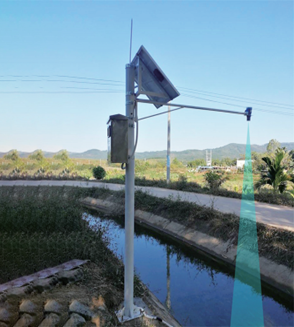
Multi-Scenario Applications: From Rivers to Industrial Use
Hydrological monitoring: Rivers, lakes, channels—especially for flash flood warnings (high-frequency monitoring during rapid water level changes).
Shipping docks: Non-contact measurement doesn’t interfere with vessels; real-time water level monitoring aids docking.
Industrial applications: Liquid level measurement in chemical/energy sectors (e.g., tanks, reservoirs)—corrosion-resistant and interference-proof.
Remote unmanned sites: Mountainous or isolated areas with solar power and remote transmission, reducing manual inspection costs.

Urban Flood Monitoring During Rainy Seasons

Water Treatment Assistance

Recommended Reading
Perimeter Security Radar for Boundary Protection | Nanoradar
Discover Nanoradar’s NSR200 perimeter security radar for reliable 24/7 monitoring in rain, snow, fog, dust, and darkness.
2026-10-22
As a partner of Rockchip, Nanoradar showcased its LiDAR‑Radar integrated unit at the Rockchip booth, highlighting the collaborative achievements of both companies in chip technology and intelligent sensing.
2026-10-19
CONTACT US
1
Please read our 《Platform Compliance and End-User Undertaking Statement》 before purchasing any product on this website.
Consultation Hotline
+86-731-88939916
Head office Address
B7, Lugu Corporation Plaza, No.27 Wenxuan Road, Hi-tech District, Changsha, China

Please tell us what you need
Please provide your contact details and specific requirements below. We will contact you within 2 business days.